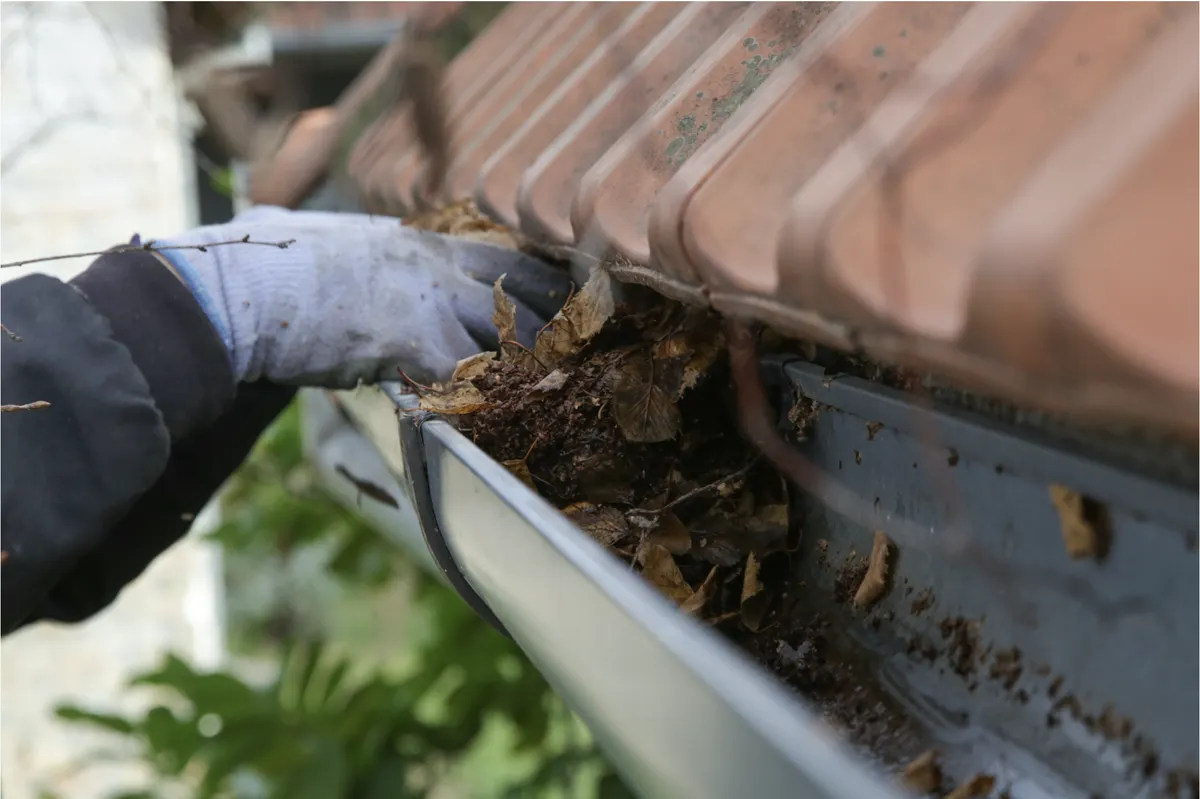
Connecticut ranks first nationally for urban tree canopy density, and Hartford-area homes pay the price every season. Sugar maples, red oaks, and silver maples drop massive debris loads that pack gutters tight, block downspouts, and set the stage for ice dams and water damage.
Connecticut is the most densely tree-canopied state in the nation, with roughly 60% forest cover and 67% urban tree canopy across its municipalities. In the greater Hartford area, that canopy translates directly into gutter maintenance demands that exceed most other regions in the country. Sugar maple, red maple, white oak, red oak, scarlet oak, and silver maple — the dominant species lining Hartford County streets and yards — each contribute distinct debris types across different seasons.
Fall brings the obvious leaf drop, but the debris cycle starts earlier. Silver maples release helicopter-shaped samaras in late spring. Oaks shed catkins and pollen clusters in April and May. By summer, storm-broken twigs and seed casings accumulate in gutters that were clean just weeks earlier. The result is a year-round debris challenge that a single annual cleaning cannot address.
Hartford receives approximately 49 inches of rainfall annually, spread across roughly 113 rain days. That volume of water needs an unobstructed path from roof to grade. When gutters are packed with decomposing leaves and compacted debris, water overflows the trough, saturates fascia boards, pools against foundations, and — between November and March — freezes into ice formations that pry gutters from the roofline. Uncontrolled runoff from clogged systems also runs counter to Connecticut's stormwater management regulations, which emphasize directing rainwater through proper drainage channels rather than allowing it to sheet across impervious surfaces. The February 2026 blizzard demonstrated exactly how quickly clogged systems fail under Connecticut's winter conditions, causing widespread ice dam damage across Hartford County.
Connecticut homeowners in areas with heavy canopy coverage should budget for two to four gutter cleanings per year. Properties surrounded by silver maples or oaks may need cleanings in spring, midsummer, late fall, and again before the first hard freeze.

A thorough gutter cleaning is more than scooping leaves out of a trough. The process addresses every component of the rainwater management system, from the gutter channel itself through the downspouts and ground-level discharge points. Skipping any step leaves the system vulnerable to the exact failures the cleaning is meant to prevent.
All leaves, twigs, seed pods, shingle grit, and decomposed organic matter are removed by hand from the gutter trough. In Hartford, this often includes compacted layers of maple samaras and oak leaf fragments that have cemented together from repeated wetting and drying cycles.
Each downspout is flushed with water under pressure to clear internal blockages. Elbows and transitions are checked for compacted debris. Downspout strainers are cleaned or replaced if deteriorated. This step catches clogs that are invisible from ground level.
The entire gutter system is flushed with water to verify unobstructed flow from every section through the downspouts to the discharge points. Proper slope is confirmed — water should move steadily toward outlets with no pooling or standing water in the trough.
Hangers, brackets, seams, end caps, and fascia attachment points are inspected for damage, corrosion, or loosening. Any issues discovered during cleaning are documented and reported. Catching a loose hanger during a cleaning prevents a full gutter section failure during the next ice event.
All debris removed from the gutters is collected and hauled away or bagged for disposal. Landscaping, walkways, and driveways below the work area are left clean. The property should look better after the service, not worse.
Clear gutters before the next storm, freeze, or leaf drop cycle. Free estimates for residential properties across greater Hartford.
Call Now — (860) 351-1682Hartford's tree species and climate create distinct debris events throughout the year. Timing cleanings around these events keeps gutters functional when they are needed most.
The most critical cleaning of the year. Sugar maples, red maples, and oaks complete their leaf drop by early November in the Hartford area. This cleaning clears the heaviest debris load of the year and prepares gutters for winter freeze-thaw cycling. Scheduling before the first hard freeze prevents leaves from becoming frozen obstructions that persist until spring.
Winter debris, shingle grit loosened by ice, and early-season seed pods accumulate through the cold months. Silver maples release samaras in late spring, and oaks drop catkins and pollen clusters. A spring cleaning clears the system before Connecticut's heaviest rainfall months arrive in June and July.
Recommended for properties with heavy canopy cover. Summer thunderstorms break twigs and small branches that land in gutters. Cottonwood seed fluff, if present, mats into a water-resistant layer that blocks drainage. A midsummer check ensures gutters handle the remaining summer storm season without overflow.
An optional follow-up for late-dropping oak species. Scarlet oaks and some red oaks hold their leaves into December. Properties surrounded by these species benefit from a second fall cleaning after the final leaf drop, ensuring gutters are completely clear before the deep freeze sets in from January through March.
Pricing reflects Hartford County market rates as of 2026. Actual cost depends on home size, roof height, gutter accessibility, and debris volume.
| Service Type | Price Range | Notes |
|---|---|---|
| Per Linear Foot Rate | $0.70 – $2.00 / LF | Standard pricing metric; varies by accessibility and debris volume |
| Small Home (up to 1,500 sq ft) | $80 – $150 | Single-story; straightforward roof access |
| Average Home (1,500–2,500 sq ft) | $109 – $250 | Hartford County average range; most common job size |
| Large Home (2,500+ sq ft) | $200 – $361 | Multi-story; complex rooflines; higher debris loads |
| Seasonal Maintenance Plan | Contact for pricing | 2–4 cleanings/year; per-visit discount over one-time rate |
| Downspout Unclogging (add-on) | $50 – $100 | For severe blockages requiring augering or disassembly |
| Minor Gutter Repair (add-on) | $75 – $200 | Re-sealing seams, reattaching hangers discovered during cleaning |
Homeowners who schedule recurring cleanings typically pay 10–20% less per visit than one-time service calls. A seasonal plan covering two or three cleanings per year is the most cost-effective approach for properties under Hartford's heavy tree canopy. Connecticut requires HIC registration for home improvement work exceeding $200.
Common questions about gutter cleaning for Hartford and Hartford County properties.
For more information about Connecticut weather patterns and climate data, visit the National Weather Service. Homeowners with questions about contractor registration can consult the Connecticut Department of Consumer Protection.
Free estimates for residential properties in Hartford, West Hartford, East Hartford, Manchester, Glastonbury, and throughout Hartford County.
Call For a Free Estimate