Greater Hartford's Gutter Experts

Complete Gutter Replacement

Connecticut's freeze-thaw cycling and heavy snowfall push aging gutter systems past their limits. Full replacement — from teardown through seamless aluminum installation — restores reliable water management and protects Hartford homes from fascia rot, foundation damage, and ice-related failures.

When Gutters Need Full Replacement

Aluminum gutters carry a typical lifespan of 20 to 30 years under normal conditions, but Hartford's climate is far from normal. The city sits in IECC Climate Zone 5A, where daily temperatures oscillate above and below freezing throughout winter. Each crossing creates a freeze-thaw cycle that fatigues metal, loosens hangers, and splits seams — accelerating the wear timeline significantly compared to milder regions.

Repeated repairs signal that a gutter system has reached the end of its functional life. Patching a leaking seam provides temporary relief, but the underlying metal has already been weakened by years of thermal expansion and contraction. When one section fails, the adjacent sections are typically close behind. The cost of three or four targeted repairs in a single year often approaches or exceeds the cost of full replacement — without delivering the 20-year performance reset that a new system provides.

Hartford's older housing stock intensifies the timeline. Colonial Revival homes — the dominant architectural style across the city and its suburbs — feature complex rooflines with multiple valleys, dormers, and directional changes. Each transition point concentrates water flow and ice stress, wearing out gutter systems faster than simpler ranch-style configurations. Properties built before 1970 may still have original galvanized steel gutters that have long since exhausted their protective zinc coating.
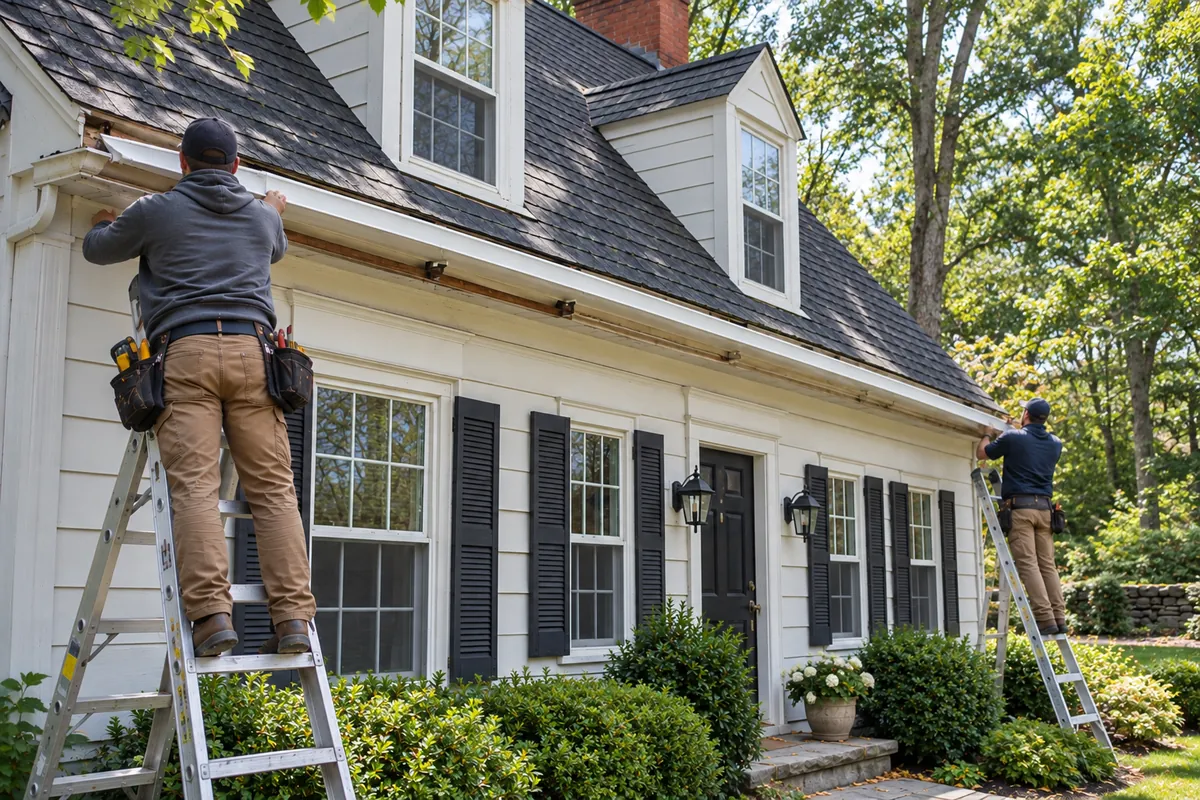
Gutter replacement in progress on a Hartford home
20–30 yr
Typical Lifespan
$10–$15/LF
Replacement Cost
49″
Annual Rainfall
Zone 5A
IECC Climate Zone

Signs a Gutter System Needs Replacement

Any single issue may justify a targeted repair. Multiple signs appearing simultaneously indicate that the system has reached the end of its service life and full replacement is the more cost-effective path forward.

Structural

Sagging or Pulling Away

Gutters separating from the fascia board indicate that hangers have failed or that the fascia itself has rotted from moisture intrusion. Years of ice loading in Hartford winters stretch hanger brackets beyond their holding capacity, and once gutters begin to sag, the misalignment accelerates further water damage to the attachment surface.

Corrosion

Rust Holes & Corrosion

Visible rust spots, pinhole leaks, or flaking metal surfaces mean the protective coating has failed. Once corrosion penetrates the gutter wall, the surrounding metal deteriorates rapidly — especially during Connecticut winters when standing water in corroded areas freezes, expanding the damage with each cycle.

Water Damage

Fascia Rot & Staining

Peeling paint, soft spots, or visible wood deterioration along the fascia board behind gutters signals chronic water leakage. Fascia repair costs $6 to $20 per linear foot and should be addressed during replacement — mounting new gutters on compromised fascia guarantees premature failure of the new system.

Seams

Separated Seams & Joints

Sectional gutter systems develop leaks at every joint over time. Sealant dries out, thermal expansion works connections loose, and ice forces seams apart. If multiple seams are leaking, replacing the entire system with seamless gutters eliminates every joint-related failure point permanently.

Drainage

Standing Water & Overflow

Water pooling inside gutters or overflowing during moderate rainfall indicates improper slope, structural deformation, or blockages caused by physical sagging. Hartford receives 49 inches of rainfall annually — a gutter system that cannot drain efficiently during average storms will fail catastrophically during heavy events.

Foundation

Foundation Erosion & Basement Moisture

Water stains on basement walls, pooling near the foundation, or soil erosion around the perimeter of the home are downstream consequences of gutter failure. By the time these symptoms appear, the gutter system has been underperforming for an extended period and damage to the foundation may already be in progress.

Schedule a Free Gutter Assessment

A thorough inspection of the existing system, fascia condition, and roofline drainage — at no cost and with no obligation.

Call Now — (860) 351-1682

The Replacement Process

Gutter replacement is more involved than new installation because it begins with the careful removal of a deteriorated system and assessment of the structure it was protecting. Each step follows a sequence that ensures the new system performs reliably through Connecticut's demanding climate.

1

Inspection & Documentation

The existing gutter system, fascia boards, soffit, and roofline are evaluated before any work begins. Problem areas — rot, structural damage, improper slope — are documented so the replacement plan addresses every underlying issue, not just the visible symptoms.

2

Careful Removal

The old system is detached methodically to avoid damaging fascia, siding, or roofing materials. Hangers are backed out rather than pried. On older Hartford homes with wood or clapboard siding, extra care prevents cracking brittle materials. All old gutters, hardware, and debris are hauled away.

3

Fascia Repair & Preparation

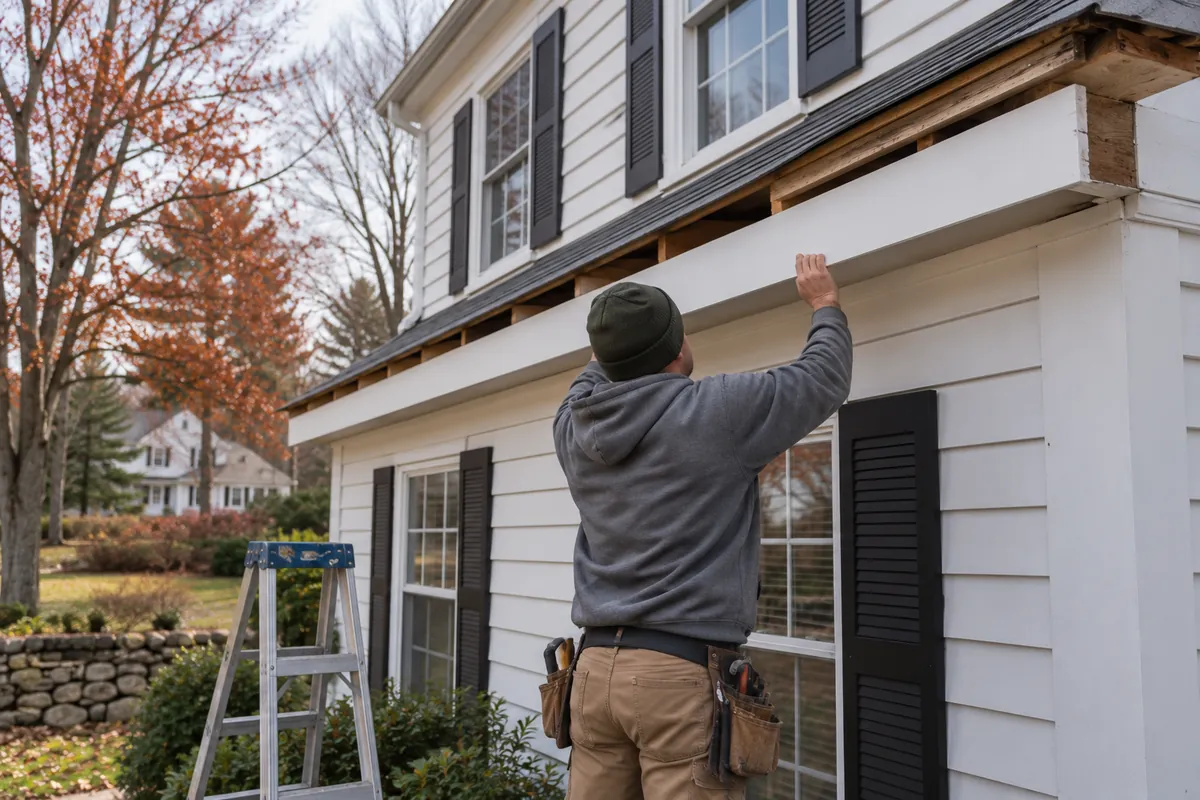
With the old system removed, the full fascia surface is exposed and inspected. Rotted sections are replaced, water-damaged areas are treated, and the mounting surface is prepared to accept new hardware. Skipping this step is the single most common cause of premature failure in replacement projects.

4

On-Site Fabrication

Seamless gutters are roll-formed on-site from continuous aluminum coil stock to the exact dimensions of each run. This eliminates the joints and splices that caused leaks in the old system. Color-matched options ensure the new gutters complement the home’s exterior.

5

Installation & Hanger Spacing

Hidden hanger brackets are installed at 18 to 24-inch intervals — tighter than the 36-inch spacing common in milder climates. This closer spacing distributes ice loads across more attachment points, preventing the sagging and fascia pull-away that define gutter failure in Connecticut winters.

6

Water Flow Testing & Cleanup

The completed system is tested with water to verify proper flow, confirm slope angles, and check every connection for leaks. Downspout discharge is evaluated to ensure water moves away from the foundation. The work area is cleaned thoroughly before the crew departs.

Professional gutter replacement process showing fascia repair
18–24″
Hanger Spacing
38–48″
Annual Snowfall
5–7 hrs
Replacement Time
$6–$20/LF
Fascia Repair Cost

Material Options

Material selection for replacement should prioritize freeze-thaw resilience and longevity. Hartford’s position in IECC Climate Zone 5A narrows the field to materials that can withstand repeated thermal cycling without fatigue cracking or corrosion.

Recommended

Seamless Aluminum

The standard for residential replacement projects throughout greater Hartford. Aluminum handles freeze-thaw cycling without cracking, resists corrosion from road salt splash, and maintains structural integrity under ice loads. Seamless fabrication eliminates the joints where leaks begin.

Cost: $5.70 – $12.60 / LF  |  Lifespan: 20–30 years

Copper

A premium material that develops a distinctive verdigris patina suited to Hartford’s Colonial Revival and Victorian architecture. Copper delivers exceptional longevity and handles freeze-thaw stress without fatigue cracking. Requires soldered joints rather than seamless fabrication.

Cost: $25 – $50 / LF  |  Lifespan: 50–80 years

Galvanized Steel

Superior structural strength for homes with unusually large roof areas or commercial applications. Steel handles extreme ice loads better than aluminum but is heavier and more labor-intensive to install. The zinc coating resists corrosion, though it wears in areas exposed to standing water.

Cost: $11 – $33 / LF  |  Lifespan: 20–25 years

Not Recommended

Vinyl

Vinyl gutters are not recommended for IECC Climate Zone 5A. Repeated freezing makes vinyl brittle within 3 to 5 years, leading to cracks, splits, and catastrophic failure during ice events. Replacing a failed system with vinyl in the Hartford area is not a sound investment.

Lifespan in Connecticut: 3–7 years before significant failure

Gutter Replacement Pricing

Material / Service Price Range Notes
Full Replacement (Aluminum) $10 – $15 / LF Includes teardown, haul-away, fascia check, and new seamless install
Seamless Aluminum (material only) $5.70 – $12.60 / LF 5" and 6" K-style profiles; gauge and color options
Galvanized Steel $11 – $33 / LF Superior ice-load capacity; heavier installation
Copper $25 – $50 / LF Premium option; 50–80 year lifespan; soldered joints
Fascia Board Repair $6 – $20 / LF Rot from ice damage; must be addressed before mounting new gutters
Downspout Replacement $5 – $12 / LF Aluminum standard; includes mounting hardware
Gutter Guards (add-on) $7 – $20 / LF Micro-mesh recommended for Hartford’s heavy tree canopy

A typical whole-house aluminum gutter replacement in the Hartford area runs $1,500 to $2,250 for a standard home with approximately 150 linear feet of guttering. Properties with complex Colonial Revival rooflines, multiple stories, or significant fascia repair needs fall in the $2,500 to $4,000 range. Connecticut law requires a written contract and provides a 3-day cancellation right for all home improvement work exceeding $200.

Frequently Asked Questions

Common questions about gutter replacement for Hartford and greater Hartford properties.

Replacement is the better investment when gutters show multiple failure points simultaneously — sagging sections, visible rust or corrosion holes, separated seams, and water pooling behind the fascia. If repair costs would exceed 40 to 50 percent of full replacement cost, or if the system is over 20 years old and showing age-related deterioration, replacement delivers better long-term value. Hartford's freeze-thaw cycling accelerates wear beyond what most homeowners expect, so a system that looks marginal in summer often fails catastrophically during the first heavy winter.
Full gutter replacement in the greater Hartford area runs $10 to $15 per linear foot, which includes removal of the existing system, haul-away, fascia inspection, and installation of new seamless aluminum gutters. A typical 150-linear-foot home averages $1,500 to $2,250. Aluminum gutter material alone ranges from $5.70 to $12.60 per linear foot depending on gauge and profile size. Fascia board repair, if needed, adds $6 to $20 per linear foot.
Most residential gutter replacements in the Hartford area are completed in a single day. A standard home takes 5 to 7 hours, which includes careful removal of the old system, fascia inspection and any minor repairs, on-site fabrication of new seamless gutters, installation, and water flow testing. Homes with extensive fascia rot or complex rooflines — common on Hartford's Colonial Revival and Victorian properties — may extend into a second day.
Late spring through early fall offers the most predictable working conditions for gutter replacement. However, fall is particularly important because it ensures the new system is in place before Connecticut's heavy snow season begins in December. Waiting until spring means the home goes through another winter with a failing system — and Hartford averages 38 to 48 inches of snowfall that places enormous stress on compromised gutters. Emergency replacements can be performed in winter when temperatures allow sealant to cure.
Professional gutter removal is designed to protect the surrounding structure. The existing system is detached methodically — hangers are backed out rather than pried, and any nails or screws in the fascia are removed cleanly. On older Hartford homes with wood or clapboard siding, extra care is taken to avoid cracking brittle materials. The fascia is inspected thoroughly after removal, and any damage discovered during teardown is documented and addressed before the new system goes up.
Connecticut requires Home Improvement Contractor (HIC) registration for any residential work exceeding $200. The state also mandates a written contract for gutter replacement projects, and homeowners have a 3-day right of cancellation after signing. Connecticut's Department of Consumer Protection maintains a Guaranty Fund that returned over $3 million to consumers in 2025, providing a financial backstop if a registered contractor fails to complete work as agreed.

For more information about Connecticut weather patterns and climate data, visit the National Weather Service. Homeowners with questions about contractor protections can consult the Connecticut Department of Consumer Protection.

Ready for Gutters That Handle Connecticut Winters?

Free on-site assessments for residential properties in Hartford, West Hartford, Glastonbury, Simsbury, and throughout the greater Hartford area.

Call For a Free Estimate