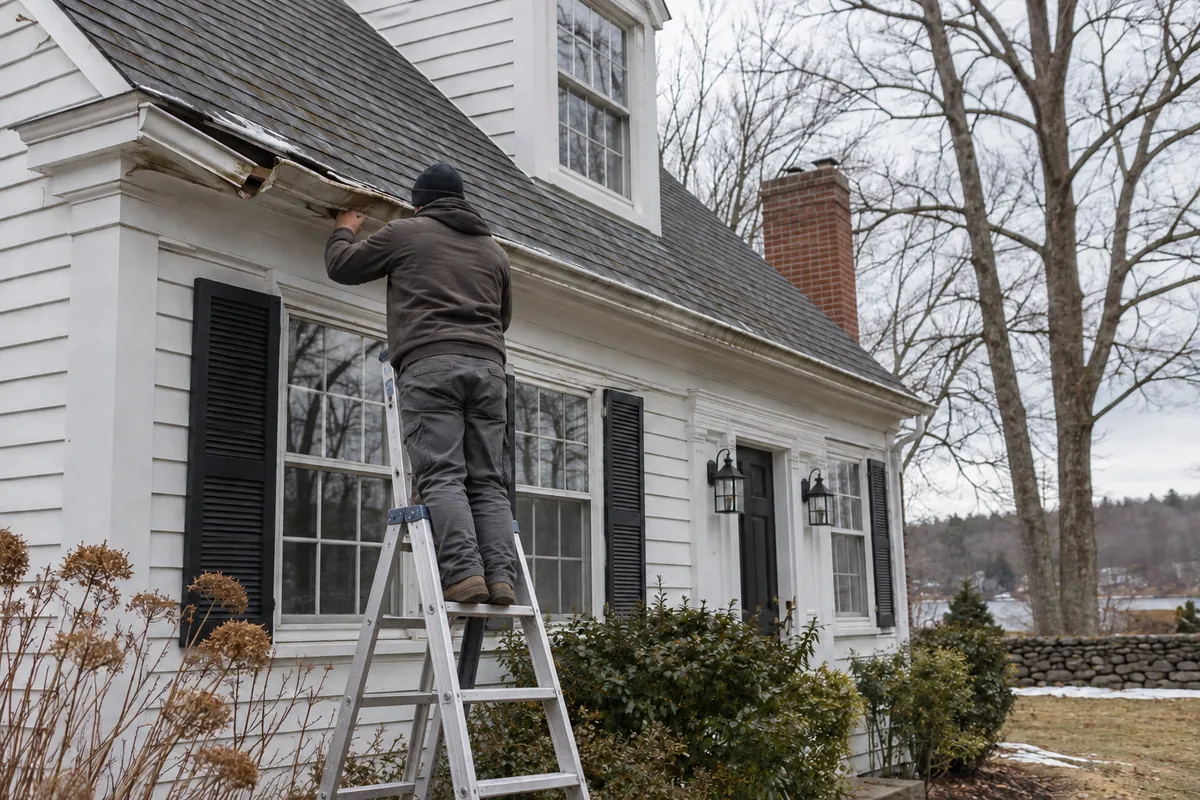
Connecticut's freeze-thaw cycles, nor'easters, and heavy leaf loads take a measurable toll on residential gutter systems. Targeted repairs restore proper drainage before minor damage escalates into fascia rot, foundation erosion, and interior water intrusion.
Gutter damage in the Hartford area follows predictable patterns driven by the region's climate. Connecticut sits in IECC Climate Zone 5A, where temperatures cross the freezing threshold repeatedly between November and March. Each freeze-thaw cycle places mechanical stress on every connection point, hanger bracket, and seam in the gutter system.
The February 2026 blizzard demonstrated the destructive potential of ice dams across the greater Hartford area, with widespread reports of gutters pulled away from fascia boards, crushed hanger brackets, and split seams from ice expansion. Even homeowners whose gutters survived that event may be dealing with weakened attachment points that will fail during the next heavy ice load.
Beyond ice, Hartford County's dense tree canopy — Connecticut ranks first nationally at roughly 67% canopy coverage — contributes to clogging and water backup. Sugar maples, red maples, white oaks, and silver maples shed enormous volumes of leaves each fall. When debris accumulates in gutters, water backs up against the fascia and roofline rather than draining through downspouts. That standing water becomes a freeze-thaw problem the moment temperatures drop below 32°F.
Visible warning signs include water cascading over gutter edges during rain, staining or streaking on siding below the gutter line, sagging sections visible from ground level, peeling paint on fascia boards, and pooling water near the foundation. Any of these indicators warrants inspection before the damage compounds.
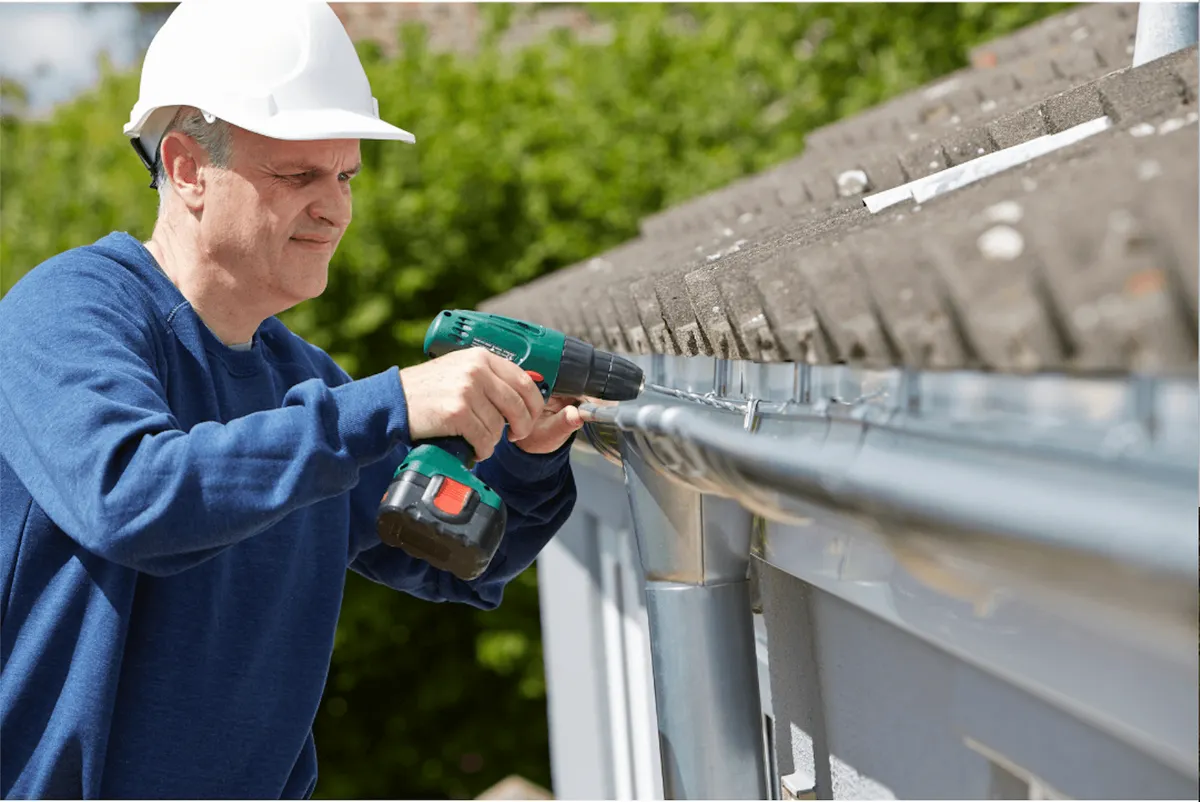
Most gutter damage in the Hartford area falls into four categories, each driven by Connecticut's specific combination of freeze-thaw cycling, heavy snowfall, and dense tree canopy.
Sagging between hanger brackets is the most frequent gutter problem in the Hartford area. When hangers are spaced too far apart — often at 36 inches instead of the 18 to 24 inches recommended for Climate Zone 5A — ice weight causes the unsupported span to flex and permanently deform. Repair involves adding intermediate hangers, replacing damaged brackets, and resecuring the gutter to the fascia at proper intervals.
Typical repair: Adding hangers at 18–24″ spacing across the affected section.
Sectional gutter systems develop leaks at every joint over time, and freeze-thaw cycling accelerates the process dramatically. Water expanding 9% as it freezes inside the gutter places outward pressure on every seam. After multiple cycles, sealant fails and joints separate. Repair involves cleaning the joint surfaces, applying industrial-grade gutter sealant rated for below-zero temperatures, and in severe cases, replacing the affected section with seamless material.
Typical repair: Resealing joints with cold-rated sealant, or splicing in seamless sections.
Downspouts disconnect from gutter outlets, develop clogs from leaf debris, or become crushed by ice sliding off the roof. Disconnected downspouts dump water directly against the foundation wall, where it can enter basements and crawl spaces. Hartford-area homes are especially vulnerable because the region's 49 inches of annual rainfall means high water volume moving through the system for much of the year.
Typical repair: Reconnecting outlets, clearing clogs, or replacing damaged downspout sections.
Fascia boards are the wood surfaces that gutters attach to along the roofline. When gutter connections fail — even briefly — water reaches the fascia and begins the deterioration process. In Connecticut's climate, that moisture freezes and expands inside the wood grain, accelerating rot far faster than in milder regions. Fascia repair must be completed before new or repaired gutters can be securely mounted.
Typical repair: $6–$20 per linear foot for fascia board replacement.
A thorough inspection of the gutter system, fascia condition, and drainage patterns — at no cost and with no obligation.
Call Now — (860) 351-1682Not every gutter problem requires full system replacement. Isolated damage — a single sagging section, one leaking seam, a disconnected downspout — is a straightforward repair candidate. The gutter system as a whole may have years of useful life remaining, and targeted repairs restore function without the cost of a complete teardown and reinstallation.
Replacement becomes the more practical option when damage is widespread. Multiple sagging sections suggest systemic hanger spacing problems that affect the entire run. Rust holes along the bottom of steel gutters indicate material failure beyond patching. Persistent leaking at three or more joints on a sectional system means the sealant has failed system-wide. Gutters that have pulled away from the fascia in several locations point to underlying fascia damage that needs addressing before any reattachment will hold.
As a general guideline, when repair costs approach 40 to 50 percent of full replacement cost, replacement typically delivers better long-term value. A new seamless aluminum system eliminates the joints that cause most leaks, includes proper hanger spacing for Connecticut's climate, and carries a 20 to 30-year lifespan versus ongoing patchwork that may last only a few more seasons.
| Repair Type | Price Range | Notes |
|---|---|---|
| Seam & Joint Resealing | $4 – $10 / LF | Industrial sealant rated for below-zero temperatures |
| Hanger Replacement | $5 – $12 / LF | Includes resecuring gutter at proper 18–24″ intervals |
| Section Replacement | $8 – $18 / LF | Splicing in new seamless aluminum to replace damaged run |
| Downspout Repair | $5 – $15 / LF | Reconnection, clog clearing, or section replacement |
| Fascia Board Repair | $6 – $20 / LF | Wood replacement before gutter remounting; rot from ice damage |
| Ice Dam Damage Repair | $10 – $30 / LF | Comprehensive repair of ice-damaged sections; may include fascia |
| End Cap Replacement | $8 – $15 each | Sealing or replacing failed end caps |
Most single-issue gutter repairs in the Hartford area cost between $150 and $500. Multi-point repairs addressing several problems on the same system typically range from $400 to $1,200. Connecticut requires HIC registration for residential work exceeding $200 — homeowners should verify active registration before authorizing any repair.
Common questions about gutter repair for Hartford and Hartford County properties.
For more information about Connecticut weather patterns and climate data, visit the National Weather Service office. Homeowners with questions about contractor registration can consult the Connecticut Department of Consumer Protection.
Free on-site inspections for residential properties in Hartford, West Hartford, Glastonbury, Simsbury, Farmington, and throughout Hartford County.
Call For a Free Estimate