Hartford's Ice Dam Specialists

Ice Dam Prevention & Removal

Hartford averages 38 to 48 inches of snowfall annually, and its Colonial Revival rooflines create the exact conditions ice dams exploit. Professional prevention eliminates the damage cycle before it starts. When ice dams do form, steam removal is the only method that clears the blockage without destroying the roof.

What Are Ice Dams?

An ice dam is a ridge of ice that forms along the eaves of a roof, blocking melting snow from draining off the surface. The mechanics are straightforward but destructive: heat escaping from the living space below warms the upper sections of the roof, melting the snow layer from underneath. That meltwater flows downhill toward the eaves — the coldest part of the roof because they extend beyond the heated building envelope. When the water reaches the cold eave, it refreezes, forming a growing barrier of solid ice.

As the ice dam thickens, it creates a reservoir of liquid water behind it. That pooled water has nowhere to drain. It backs up under shingles, seeps through roofing membrane, and penetrates into the attic, wall cavities, and ceilings below. A single ice dam event can cause thousands of dollars in interior water damage, and the structural deterioration it triggers — wood rot, mold growth, compromised insulation — continues long after the ice melts.

Ice dams also attack the gutter system directly. The weight of accumulated ice pulls gutters away from the fascia, bends hangers beyond recovery, and splits seams. A gutter system that was functioning adequately before winter can be damaged beyond repair by a single prolonged ice dam event.
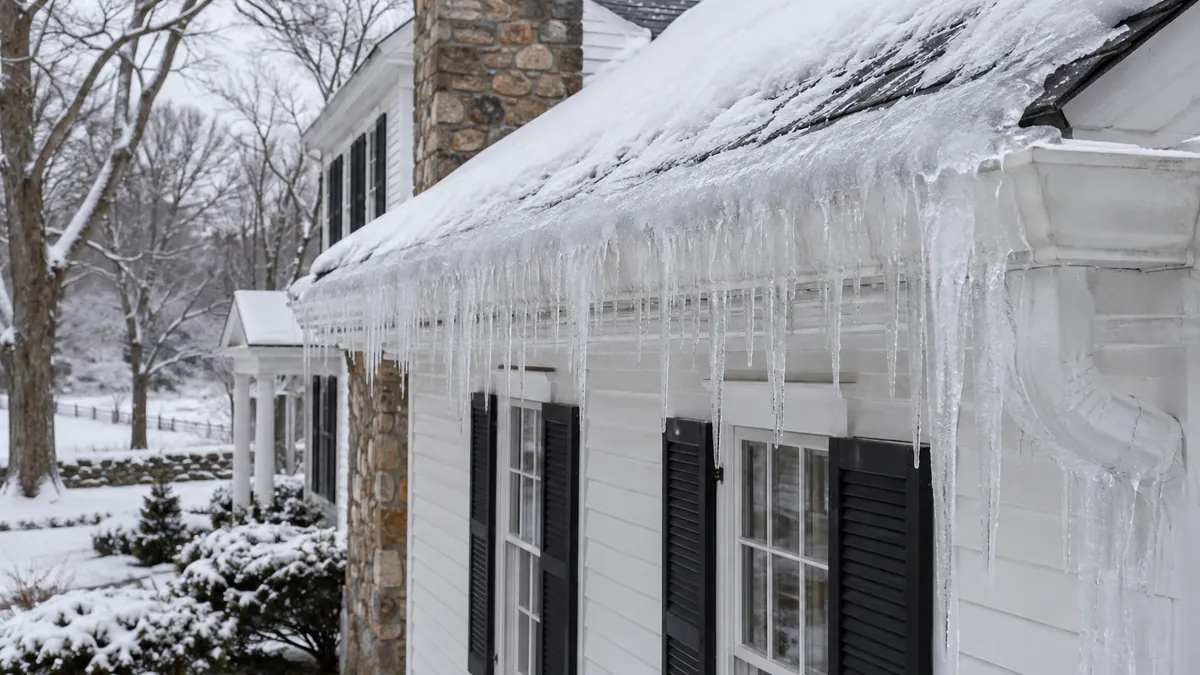
Ice dam formation on a Hartford roofline
48″
Annual Snowfall
14.2″
February Average
$159–$476
Removal Cost Range
Zone 5A
IECC Climate Zone

Why Hartford Is Uniquely Vulnerable

Hartford sits at the intersection of several factors that make it one of Connecticut’s most ice-dam-prone markets. The city’s position in IECC Climate Zone 5A — as designated on the IECC climate zone map — means winter temperatures oscillate above and below freezing on a near-daily basis from December through March. This constant freeze-thaw cycling is the engine that drives ice dam formation — warm days melt snow on the roof, cold nights refreeze it at the eaves, and each cycle adds another layer to the growing ice barrier.

The dominant architectural style compounds the problem. Colonial Revival homes — prevalent across Hartford, West Hartford, Glastonbury, Simsbury, and Avon — feature steeply pitched roofs with multiple dormers, valleys, and directional changes. Each transition point creates a cold zone where meltwater refreezes. Older colonials also tend to have limited attic ventilation and inadequate insulation by modern standards, allowing interior heat to escape through the roof deck and accelerate the melt-refreeze cycle.

Connecticut holds the number one ranking nationally for urban tree canopy density. Sugar maples, red maples, oaks, and silver maples shed enormous volumes of leaves and debris each fall. When that organic material accumulates in gutters and on roof surfaces, it blocks drainage channels and creates the standing-water conditions that freeze into ice dams at the first sustained cold snap.

The February 2026 blizzard demonstrated Hartford’s ice dam vulnerability at scale. Heavy snowfall followed by rapid temperature swings caused widespread ice dam damage across Hartford, New Haven, and Danbury — overwhelming local contractors and leaving many homeowners waiting days for emergency removal.

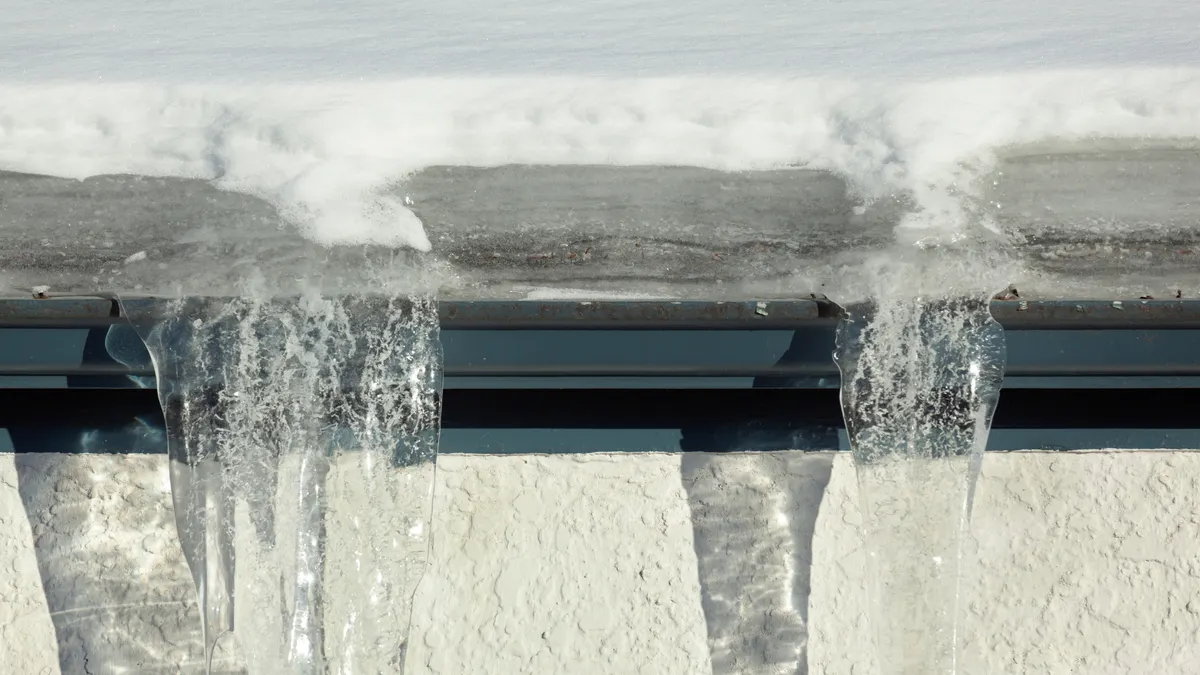
Frozen gutter downspout blocked by ice in Hartford winter
Colonial
Dominant Roofline
#1
Tree Canopy Ranking
$538K
Median Home Value
Feb 2026
Major Blizzard Event

Prevention Strategies

Effective ice dam prevention requires a layered approach. No single measure eliminates the risk entirely, but the right combination of strategies can reduce ice dam formation to near zero — even in Hartford’s demanding climate.

Root Cause

Attic Insulation & Air Sealing

The most impactful prevention measure addresses the root cause: heat escaping through the roof deck. Proper attic insulation — R-49 minimum for Connecticut’s climate zone — keeps interior warmth inside the living space where it belongs. Air sealing around penetrations like light fixtures, plumbing stacks, and attic hatches eliminates the convective heat paths that bypass insulation entirely.

Many older Hartford homes have attic insulation well below current code requirements. Bringing insulation up to R-49 can reduce ice dam risk by 70 to 80 percent while also lowering heating costs significantly. The Department of Energy guide to ice dam prevention details the relationship between attic air sealing, insulation depth, and ice dam formation.

Airflow

Roof Ventilation

Proper ventilation keeps the roof deck cold and uniform in temperature, preventing the warm-zone/cold-zone differential that drives meltwater toward the eaves. A balanced system uses soffit vents for intake and ridge vents for exhaust, creating continuous airflow that flushes heat from the attic space before it can warm the roof surface.

Colonial rooflines often have blocked or inadequate soffit vents, especially in homes where insulation was added without maintaining airflow channels. Restoring proper ventilation is frequently the missing piece in ice dam prevention.

Active Protection

Heat Cables

Self-regulating heat cables installed along the eaves and through gutters and downspouts keep drainage channels open during freeze-thaw cycling. The cables increase output automatically as temperatures drop and reduce output as conditions warm, preventing both ice buildup and excessive energy consumption.

Heat cables are most effective as a secondary safeguard on the most vulnerable eave sections — north-facing slopes, valley intersections, and areas above unheated spaces like garages or porches.

Gutter Protection

Gutter Guards & Maintenance

Micro-mesh gutter guards prevent leaf and debris accumulation that blocks water flow and creates the standing-water conditions ice dams exploit. Clean, unobstructed gutters drain meltwater before it has a chance to refreeze at the eaves. Given Connecticut’s dense tree canopy — sugar maples, red maples, and oaks shedding massive volumes each fall — gutter protection is a critical layer in the prevention system.

Membrane

Ice & Water Shield

Ice and water shield is a self-adhering membrane installed beneath the shingles along the eaves, valleys, and other vulnerable areas during roofing installation. It provides a waterproof barrier that prevents meltwater from penetrating the roof deck even if an ice dam forms above it. Connecticut building code requires ice and water shield along eaves in Climate Zone 5A, but many older Hartford homes predate these requirements and lack this critical protection layer. Adding ice and water shield during a roofing replacement is one of the most cost-effective long-term ice dam defenses available.

Protect the Home Before Winter Arrives

A comprehensive ice dam vulnerability assessment identifies the specific risk factors on any Hartford-area property — at no cost and with no obligation.

Call Now — (860) 351-1682

Professional Ice Dam Removal

When an ice dam forms despite preventive measures — or on a property that has not yet been winterized — professional steam removal is the only safe and effective response. Steam equipment heats water to approximately 290°F and delivers it at low pressure through a specialized wand, melting ice on contact without the mechanical force that damages shingles, flashing, and gutters.

DIY removal methods cause more damage than the ice dam itself. Homeowners who attack ice dams with axes, hammers, chisels, or ice picks routinely puncture roofing membrane, crack shingles, and destroy gutter sections. Rock salt and calcium chloride melt ice but corrode metal gutters, stain roofing materials, and kill landscaping below the eaves. Pressure washers drive water under shingles rather than melting ice cleanly. Every shortcut introduces new damage that compounds the problem.

Professional steam removal in the Hartford area typically takes 2 to 4 hours per job depending on the severity and extent of the ice dam. The process is methodical: ice is melted in sections starting from the gutter line and working upward, creating drainage channels that allow trapped meltwater to escape before the full dam is cleared. The gutter system is inspected during the process for damage that may need repair once conditions allow.

Hartford homeowner tip: never wait for an ice dam to resolve itself. Every day an ice dam remains in place, water continues backing up under shingles and penetrating the building envelope. Interior damage accelerates exponentially the longer removal is delayed.

290°F
Steam Temperature
2–4 hrs
Typical Removal Time
$159–$226
Average Removal Cost
0 PSI
Mechanical Force

Post–Ice Dam Damage Assessment

Ice dam damage is often invisible until weeks or months after the event. A thorough spring inspection should cover both the interior and exterior of the home, checking every point where water may have penetrated during winter.

Ceiling Stains & Bubbling

Water marks, discoloration, or bubbling paint on ceilings near exterior walls — the most common visible symptom of ice dam water penetration into the living space.

Wall Damage & Peeling Paint

Water traveling down wall cavities from ice dam leaks causes paint failure, wallpaper separation, and drywall deterioration on interior walls adjacent to the roofline.

Fascia Rot & Soft Spots

Ice dam pressure and trapped moisture accelerate fascia deterioration. Soft spots, discoloration, or paint peeling along the fascia board indicate water damage requiring repair before next winter.

Gutter Separation & Sagging

The weight of ice dams pulls gutters away from the fascia and bends hanger brackets. Sections that sag, tilt outward, or show gaps between the gutter back and fascia need repair or replacement.

Attic Mold & Moisture

Water that penetrates the roof deck soaks attic insulation and creates conditions for mold growth. Musty odors, visible mold on sheathing, or damp insulation batts require professional remediation.

Shingle Edge Damage

Ice dams lift and crack shingle edges along the eaves. Missing granules, curled tabs, or visible gaps between shingles indicate damage that will worsen during the next freeze-thaw season.

Ice Dam Removal Pricing

Service Price Range Details
Standard Steam Removal $159 – $226 Hartford area average; 2–4 hours depending on severity
Extended / Severe Cases $226 – $476 Multi-story homes, extensive ice buildup, or complex rooflines
Minimum Service Call $57+ Small or isolated ice dam on single eave section
Emergency / After-Hours Varies Priority scheduling during active water intrusion events
Prevention Assessment Free On-site evaluation of attic, ventilation, and gutter vulnerability
Heat Cable Installation $12 – $22 / LF Self-regulating cables for eaves, gutters, and downspouts

Prevention consistently costs less than repeated removal. A home that requires two professional ice dam removals per winter spends $318 to $452 annually on a reactive basis. Over five years, that total exceeds the cost of comprehensive prevention measures that would eliminate the problem entirely. Connecticut law requires HIC registration for home improvement work exceeding $200 and provides a 3-day contract cancellation right.

Frequently Asked Questions

Common questions about ice dams from Hartford and greater Hartford homeowners.

Concern is warranted any time icicles form along the eaves, especially if they are thick, extend more than a foot, or appear unevenly along the roofline. Large icicles are a visible symptom of ice dam formation behind them. Other warning signs include water stains on ceilings or walls near the roofline, ice forming in gutters while snow remains on the roof above, and snow melting unevenly across the roof surface — which indicates heat loss from the attic below. In Hartford, the highest risk window runs from late December through early March, when snowfall accumulates and daily temperatures cycle above and below freezing.
DIY ice dam removal is strongly discouraged. Homeowners attempting removal with axes, hammers, chisels, or ice picks routinely damage shingles, puncture roofing membrane, and crack gutters — creating repair costs that far exceed professional removal fees. Rock salt and calcium chloride can corrode metal gutters, stain roofing materials, and damage landscaping below. Climbing onto an icy roof without proper safety equipment is a serious fall hazard. Professional steam removal is the only method that eliminates ice dams without damaging the roof surface.
Most standard homeowner’s insurance policies in Connecticut cover interior water damage caused by ice dams — ceiling stains, wall damage, ruined insulation, and mold remediation. However, policies typically do not cover the cost of removing the ice dam itself, nor do they cover damage to the gutters, roof, or exterior structure. The distinction matters: insurance may pay to repair the ceiling but not to fix the gutter system that allowed the damage. Additionally, repeated ice dam claims can trigger premium increases or policy non-renewal. Prevention is consistently more cost-effective than relying on insurance recovery.
Prevention delivers significantly better long-term value. Professional ice dam removal in Hartford averages $159 to $226 per visit, and homes vulnerable to ice dams often need removal multiple times per winter. Over a 10-year period, that reactive approach costs far more than addressing the root causes — attic insulation, ventilation improvements, heat cable installation, and properly functioning gutters with guards. Prevention eliminates the damage cycle entirely, while removal only addresses the immediate symptom each time it recurs.
Heat cables are effective as part of a layered prevention strategy, but they are not a standalone solution. Self-regulating heat cables installed along the eaves and through gutters and downspouts keep drainage channels open during freeze-thaw cycling, preventing the ice buildup that forms dams. However, heat cables do not address the root cause — heat escaping from the attic and melting snow from below. The most effective approach combines proper attic insulation and ventilation with heat cables as a secondary safeguard for the most vulnerable eave areas.
A thorough spring assessment should check both the interior and exterior of the home. Inside, look for ceiling stains near exterior walls, peeling paint, bubbling drywall, musty odors suggesting hidden mold, and water marks in the attic. Outside, inspect gutters for separation from the fascia, bent or deformed sections, and loose hangers. Check the fascia board for soft spots, discoloration, or paint failure. Examine shingle edges along the eaves for lifting, granule loss, or cracking. Any of these findings warrant professional evaluation before the next winter season.

For more information about Connecticut weather patterns, winter storm data, and freeze-thaw forecasts, visit the National Weather Service. Homeowners with questions about contractor protections can consult the Connecticut Department of Consumer Protection.

Stop Ice Dams Before They Start

Free ice dam vulnerability assessments for residential properties in Hartford, West Hartford, Glastonbury, Simsbury, and throughout the greater Hartford area.

Call For a Free Estimate